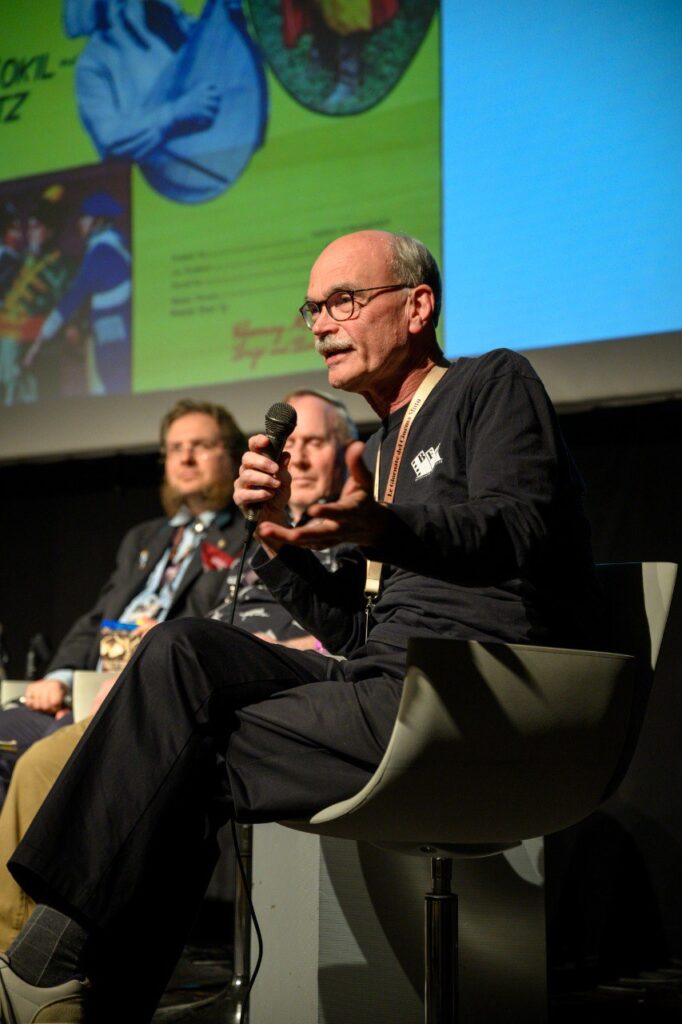
Interview to Richard Koszarski, master of masters of silent films
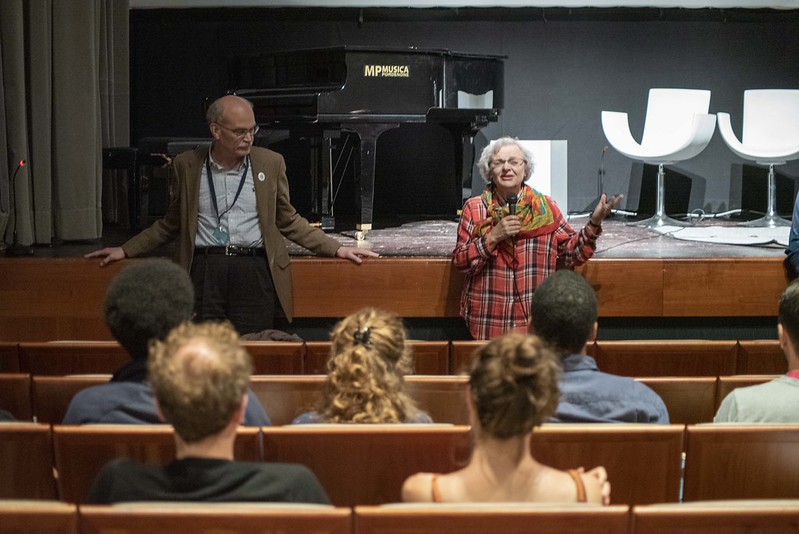
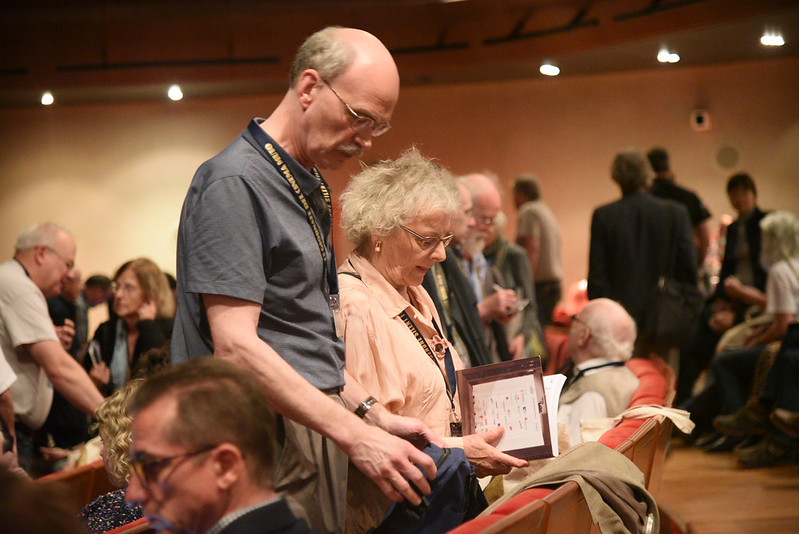
Richard and Diane Koszarski form one of the most endearing couples who have attended Le Giornate del Cinema Mutode Pordenone every year, for decades. Given the friendliness with which we shared more than one session - and an umbrella on a rainy evening! – with them, we didn’t realise that, behind his affability, Professor Koszarski (born December 18, 1947) is one of the world's greatest experts on silent cinema; a key figure in the recovery, restoration and making publicly available of film material from that era.
He is the founder of Film History: An International Journal , professor emeritus of English and film at Rutgers University in New Jersey, chief curator at the American Museum of the Moving Image in New York, curator at the Barrymore Film Centre, and his collection of material on the early history of Universal Pictures is held in the Library of Congress. We can also take note of his fine research through his books and articles about well-chosen mythic pioneers, such as Erich von Stroheim and Paul Fejos; screenplays for documentary films, such as Roger Corman, Hollywood Wild Angel (1978) andThe Man You Loved to Hate (1979); books about specific subjects, such as An Evening's Entertainment, the Age of the Silent Feature Picture, 1915-1928 (1990), Hollywood on the Hudson Film and Television in New York from Griffith to Sarnoff (2008) and Fort Lee, The Film Town (2004); numerous exhibitions, conferences and archival work of all kinds. Through his work as a historian and teacher, he has accumulated an immense amount of historical material, documentation, films and locations, which include research on the history of the American film industry, cinema and museology, and the development of television, as well as his current investigation into the history of filmmaking in New York and New Jersey. In addition, he has received the most prestigious awards, distinctions and honours in the fields in which he excels. For example: the American Council of Learned Societies Research grant (1978), the National Film Book Award for The Man You Loved to Hate: Erich von Stroheim and Hollywood, (1984), the Katherine Singer Kovacs Prize for An Evening's Entertainment: The Age of the Silent Feature Picture, 1915-1928, (1991), the National Endowment for the Humanities Fellowship (2003) and the Bergen County Historic Preservation Award for Fort Lee, The Film Town (2005). Finally, I would like to highlight the Prix Jean Mitry of Le Giornate del Cinema Muto de Pordenone (1991), given for “safeguarding and apprising the public of its cinematographic heritage.”
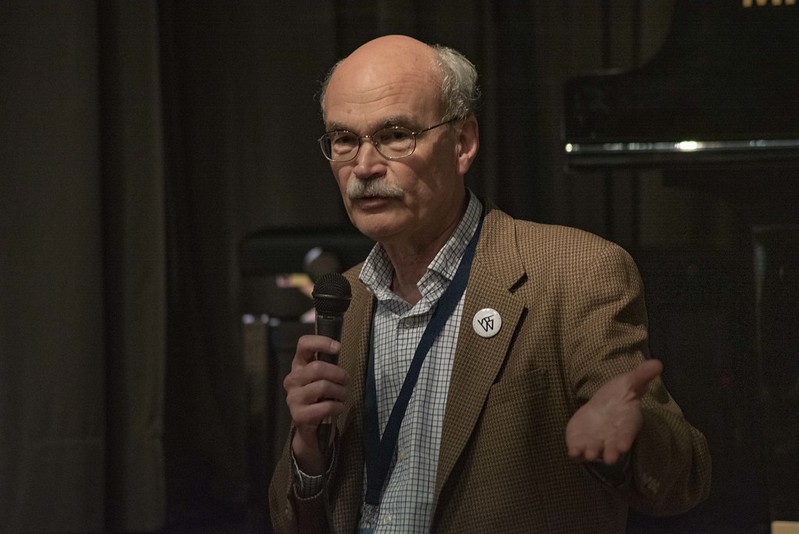
Faced with such an intimidating CV. We do not know if we should have shared the same umbrella as him and his wife Diana - who has done her own research, on William S. Hart - but they accepted our invitation, with the kind help of Giuliana Puppin. To tell the truth, Bondía had dreamed of doing this interview for years (in fact, it was she who made the contact), motivated by her need to know very specific information about a mysterious photo that was held in the Koszarski archive. In the end, the success of dismantling that mystery was a mixed bag and most of her questions about remain. However, there is no failure without gain, and, in this case, there are a pretty large number of gains. We did the interview in the same Teatro Verdi where all of the festival movies are screened, on 7th October, just one day before Richard Koszarski would present his DVD and Blu-Ray, Made in New Jersey: Films from Fort Lee, America’s First Film Town (2025); his latest exciting work.
The Conversation
Florenci Salesas: As someone really interested in what Fort Lee represented for the early cinema, I’m pleased to tell you that this book is stunning. It gives a lot of information about all kinds of stuff in the subject. It's all very well put together and clarifies a lot of things to me. Past year you told me about your work and research about Fort Lee. Can you tell us a bit about it?
RICHARD KOSZARSKI: This book, the work was done 25 years ago. It came out in 2004, I think, was the original book. I'm glad that they're still selling copies. So, we live in New Jersey, which is across the river from New York City. New York City is here (pointing at an imaginary map on the table), New Jersey is here… and these people from the city of Fort Lee, there was some historic society. They were interested in the importance to the community of movie making because it wasn't just people who came in and made movies. They hired the local people to be electricians, painters, to work in the film laboratory, to work in the film distribution business…. So, it was part of the economy as well. So yes, they had famous stars, Mary Pickford and Theda Bara… but there were also hundreds of people who made their living of this, who happen to live there, and we don't hear anything about it. So, well, we're going to celebrate this business.
Laura Bondía: You have been professor as well, with links to your research…
R. KOSZARSKI: I was teaching at Rutgers University, which is a state university in New Jersey, and they called up Rutgers and said: “do you have anybody who lives around here, near us, who could tell us, you know, something about this?” And they said “Well, this guy, Koszarski is teaching here now. He's interested in the East Coast cinema”, because I had been working at the Astoria Motion Picture Center, which was the Paramount Studio in New York City. We had worked on that for 20 years to get that history to that city. So, fine, I began working with them.
DIANE KAISER KOSZARSKI: The Paramount Studios area became a project of Arts Council and city development money, and the remaining buildings were turned into the Museum of the Moving Image in Astoria, New York, which is right next door to Manhattan, the borough of Queens, New York. So, there's a commercial studio now where the old 1920s Paramount Studio….
R. KOSZARSKI: So, if you've heard of the Museum of the Moving Image in New York, that's built where the Paramount Studio was, and now there's a new studio and a museum also on this spot. So, I had finished with that, I was teaching in Rutgers, and then I got dragged into this Fort Lee project, which was more modest, but it had a different angle to it. Well, we want to do historic tours, to show people where the studios were and the locations, like this. This is a location you can go to, the famous Pearl White Point, for instance, you know (pointing at it).
F.S.: Pearl White Point, right on the cover of the book !
R. KOSZARSKI: Yes! It's kind of dangerous, but you can go there actually.
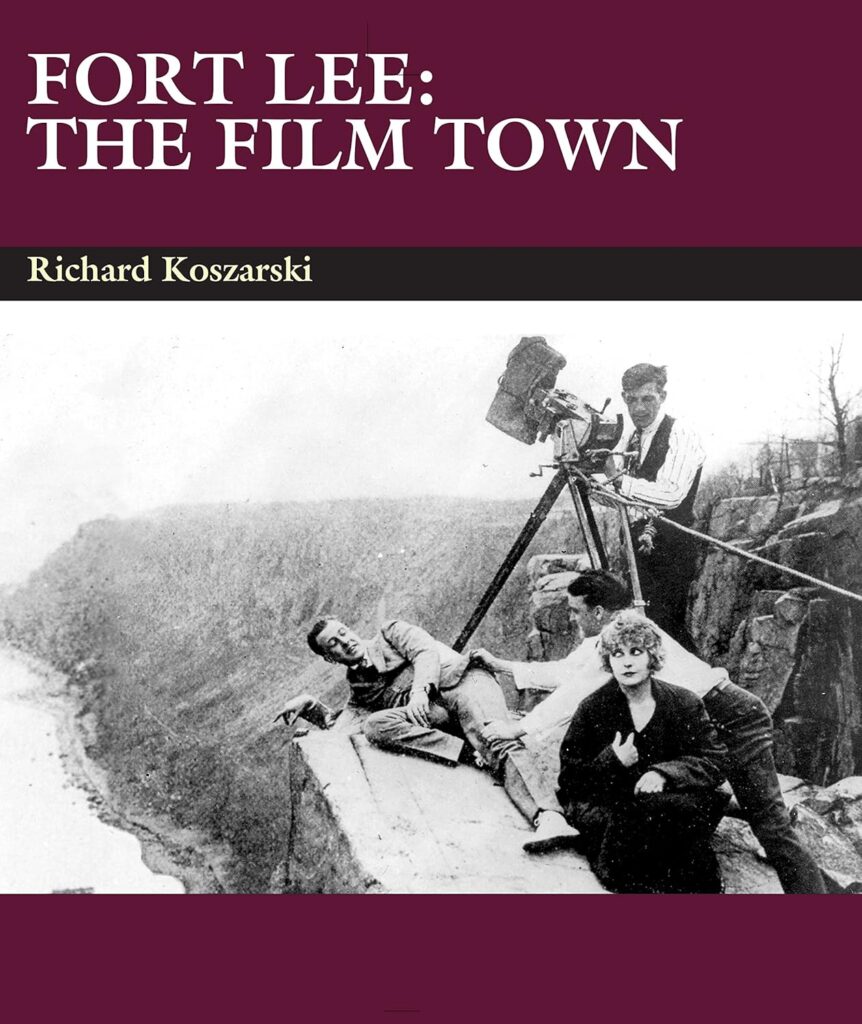
F.S.: Then, you have names of the actual stars, like for example this of Pearl White! It's nice!
R. KOSZARSKI: Well, this shouldn’t be shown here, and here is the House of Hate (1918) and the director is George B. Seitz, she is Pearl White, this man is Arthur Miller, the cinematographer and so on. She made several serial films. This is where the cliffhanger began, The Perils of Pauline (1914), she's hanging from the side of these cliffs, which is very high.
DIANE K. K.: Can I just put on this strip of land it is a state park and there's a fence that runs along here, and you must know the shape of the rocks to find this spot. They don't want people to know exactly where it is, because people climb over the fence and would fool around on the rock and fall.
L.B.: Because it's dangerous, so it's a bit of a secret.
DIANE K.K.: Yes, you must work hard to find this spot. There isn't a big statue or something like this
F.S: That's a good thing.
DIANE K.K.: There are other spots around Fort Lee that check markers, which we'll now tell you about.
F.S.: And how about the remains of the old studios?
R. KOSZARSKI: Yes, so maybe we can do tours, maybe we can film shows, do little exhibits. Fine, maybe we can do this book. And we did this book with John Libbey, the publisher, and there was that year a series here in Pordenone. And we also made a documentary film about the Champion Studio. And we put that documentary film into a DVD.
L.B.: But isn’t it that you will be presented tomorrow?
R. KOSZARSKI: Yes, that's a different thing. The one we had before was 20 years ago, just a DVD. So, we're doing things like that. Now, what happened more recently is that they constructed this large film center, namely after the Barrymore family acting, who had made films in Fort Lee, called the Barrymore Film Center. You might look them up online. And the Barrymore Film Center has a beautiful theater, and they show sort of modern repertory cinema, and used to do exhibits. They're not doing too many exhibits anymore, but they decided to do other things with the space. But as part of this, a notion of celebrating the local history, we worked on this Blu-ray. And the Blu- ray project includes many of the titles that were only in DVD definition before.
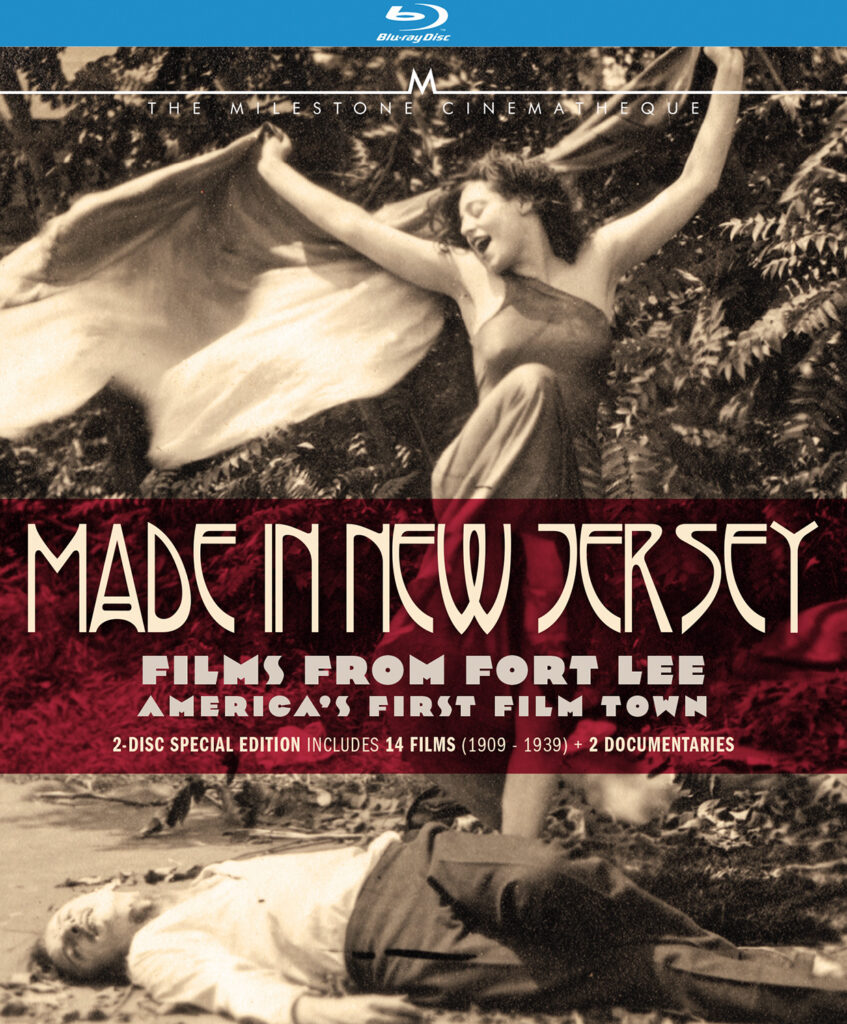
L.B.: And then, you upgraded them?
R. KOSZARSKI: Right, and now we are going for other films. So, we brought in some films from the Eye Film Museum, from the George Eastman Museum... We found even a talking feature, a sound feature, because this is mostly famous for its silent films, but it didn't disappear. Because when talking pictures came in, the studios were still there. Who were going to use them? Not the big companies, but people would put in like inexpensive sound recording equipment. And they said, independent producers who can't have access to Vitaphone or Movietone: “come here to me!” So, people like Oscar Micheaux made several films. Yiddish films were made in Fort Lee. Mormons came and made a film in Fort Lee or other studios around there. And many of these films are pretty well done. Everybody has Oscar Micheux’s films. Yiddish films are known. But we found an Edgar G. Ullmer film that was not known, one of his Ukrainian films, called Cossacks in Exile, which is a Ukrainian opera, and it was produced by this man from Canada, Vasyl Avramenko, who was a proponent of the Ukrainian diaspora, get the culture of the Ukrainian people together. So, they make this opera and not only is it an interesting production, which even has hand-colored scenes, because the Cossack village gets burned down and those scenes are colored by hand on the nitrate print, which we found in Canada.
L.B.: Which is very unusual for a 1938 movie!
R. KOSARSKI: So, I hope you get a chance to look at that Blu-ray because we wanted to show the entire history of it. It wasn't just 10 years of silent movies and then it went away. So basically, that Blu-ray is the most recent version of our attempt to publicize and make better known what was happening in the Fort Lee film community.
F.S.: There’s another pretty interesting thing here: you told us about Paramount, but there were a lot of other little (or not so little) studios in Fort Lee that didn't exist anymore, like Artcraft —where Maurice Tourneur made some masterpieces— and many others.
R. KOSZARSKI: Yes, Éclair was there, Alice Guy’s Solax was there.
F.S.: And Pathé…
R. KOSZARSKI: Well, Pathé… they would come up. They didn't have a studio in Fort Lee. Their studio was in Jersey City, which is down the shore.
F.S.: Interesting. But Éclair, yes.
R. KOSZARSKI: Éclair built a studio.
F.S.: I think they were the first to call not only Tourneur in 1914, but Albert Capellani, Émile Chautard and other great French directors of its time.
R. KOSZARSKI: Yes, they all came that same year to Éclair and then it sorts of folded into this World Film Corporation. A lot of that is explained in the book in some detail. The fact is that it was very much a French people and French studios who landed there and began building studios. Now, why did the French need to build a studio in New Jersey in 1911? It's because American producers, to fight the competition, put up tariffs. And they put up tariffs against the importing of films from Europe, most of which were coming from France at this point. So, they would be so much per foot. So, if you had 50 copies of your film, that would be a lot. But if you were only going to send one negative, you must pay the tariff one time, So, Éclair would build a laboratory, and Pathé builds a laboratory in New Jersey. And then they have the laboratory, and they said, even better, because people are starting to think our French films… it looks funny: the Paris streets, and the men have odd mustaches, and so on. So, we must make films with Americans. So, we'll have American actors in our movies, but we'll send Maurice Turneur, and Albert Capellani, over to direct…
F.S.: …With fine American stars such as Robert Warwick, Clara Kimball Young…
R. KOSZARSKI: Yes, they would use American actors. And Éclair was one of the first to do that. And then Alice Guy Blaché created her Solax company, which is really an American company, but she uses French people. Ben Carré, the art director, Lucien Andriot the camera…
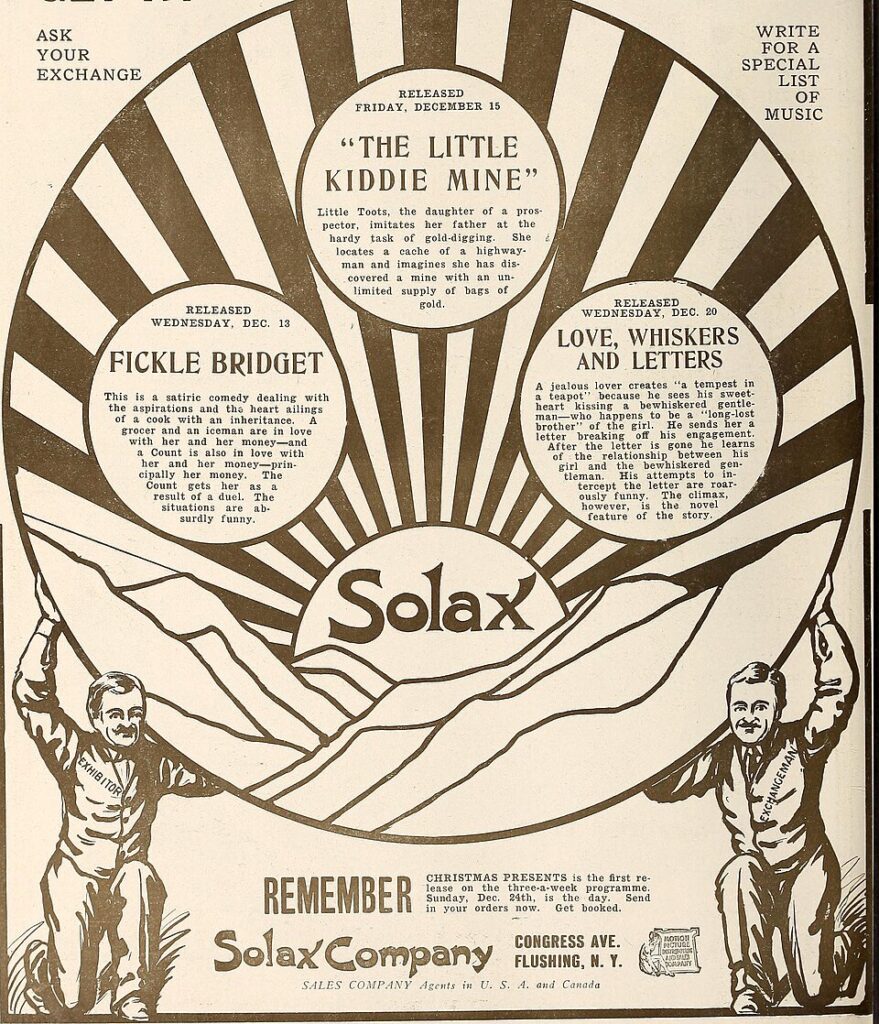
F.S.: But I wanted to say that all those studios had disappeared, but other studios later moved to Hollywood.
R. KOSZARSKI: Yes, they started to move on later.
F.S.: You mention the archives and the help of Paramount Studios as a main source of information, but I suspect that it must be more difficult to find information from the studios that disappeared.
R. KOSZARSKI: Well, it depends. You know, like Eclair, there's a lot of information in Paris, I understand, about what was happening. Any of these Nickelodeon era studios, the business disappeared many years, a hundred years ago maybe. You are not going to be able to find too much in the world of paper records. But in Paris, Gaumont and Pathé survived, so you can look at those studios. Now, the first studio that was built in the Fort Lee area was called Champion actually. And the Champion studio was an independent, low-budget studio. Later, it became part of Universal. And we used them as the subject of this film that also talked about the rest of the movie-making activity. But these were small buildings. They were not well-funded. And when the industry grew, when you had to make feature films, length films, and you had to hire expensive movie stars, they basically went by the wall side, or they were bought up, or amalgamated into something else. But other people did come in and take over. So, you had Fox builds a studio, and Universal builds a giant studio in Fort Lee, and then they stopped making films, because they are now operating major studios on the west coast of the United States, 3.000 miles away. And the studios in New Jersey weren't necessarily smaller, but they were more expensive to operate. The land was more expensive, taxes were more expensive, and even more important, labor was more expensive, because there were trade unions in the east. In California, there are no unions. And I'm just talking about unions for the actors. I'm talking about unions for carpenters, truck drivers, electricians, the painters, you know. So that was part of this big shift of the motion picture industry. As much as they could, they moved to factory towns in a place where it would be cheap. Cheap land, cheap labor, a lot of sunshine.
F.S: And I think that then the Spanish flu helped a bit to move.
R. KOSZARSKI: Yes, the influenza epidemic was very bad in the east, because in that epidemic in North America it started in the east and then it slowly moved across the country. It took some weeks to travel across the country. Now the epidemic we had recently was just suddenly it was everywhere, you know, within days. But that meant that here it is, it's in October, there's a lot of flu here, and the companies say “there's no flu in California, now. So, let's put more of our activity there and close. Let's close until this epidemic is over.” Well, you know, and then the epidemic ends and they say, okay, well, maybe we'll start again. But there were other problems. There was World War I, there was rationing, so that your business could not get coal. And the coal would not only heat your business but run your electrical generators. So, they couldn't work if they had no coal. Now, in California, they didn't need to have artificial light, and they didn't need to have that much heat. So, it was better for them to work. So, after a couple of these unfortunate circumstances, basically people said, “just let's forget about the East.” With one or two exceptions. Paramount said “we're big enough, we want to have a studio in New York. OK”. But the other people said, “this is too much trouble”. And it's redundant. It duplicates our investment on the West Coast.
F.S.: There are sad stories like the director John H. Collins one, died during the flu of 1918.
R. KOSZARSKI: He was making very good films in the East. Not in New Jersey, but he was in New York. He was incredible.
F.S.: Yes, he was in New York. Star Viola Dana was his wife.
R. KOSZARSKI: Viola Dana, yes.
F.S.: Collins stayed in the East coast studio, and said, “I’ll stay here editing the movie and you can go to California and prepare things in advance…”, but he died.
R. KOSZARSKI: It was a sad loss, yes.
L.B.: I know there is a chapter of your book An Evening’s Entertainment when you are talking about Karl Struss.
R. KOSZARSKI: Yeah, we met him.
L.B.: And I wanted to ask about that image with Sunrise, that one we can see F.W. Murnau at the stairs…
R. KOSZARSKI: With Karl Struss standing next to him writing?
L.B.: … Yes. They're shooting the cameras going down (the trolly) the steps and then somebody is holding this dark screen, you know. I have talked to Janet Bergstrom about it.
R. KOSZARSKI: She knows all about it.
L.B: I know, but I wanted to ask your opinion. Why do you think Murnau used this kind of trick? Because it wasn't easy to make and it wasn't just a camera movement.
R. KOSZARSKI: Well, I mean the whole German cinema tradition is full of tricks, whether it's moving the camera around or multiple exposures. I mean this was a Williams shot and I am sorry, but I don’t know exactly why he decided to use such resource. Janet maybe knows what kind of process it was and why they had to do that, and he wanted to achieve the effect that you see on the screen where they're walking and suddenly the cars are all around and they assumed that the best way to do it was by using that particular trick.
L.B.: It also strikes me that this kind of trick —not here specifically, which is a much more elaborate process than a mere rear projection— was used a lot at the beginning of the sound era because of the unwanted noise that the microphones picked up. In a silent film when you see Harold Lloyd driving a car, for example, it wasn't necessary to make as much effort as they did in the famous Sunrise shot, since there were no problems with the sound they could shoot with a real car, with the cameraman (and often even the director!) risking his life from an unstable open platform, in real space. In the case of Murnau's film it is very clear that there was an active artistic intention, which goes beyond the typical naturalness of Lloyd's hypothetical film, which I said, and the standard trick, used as a routine convention, of the beginning of sound. It's something else.
R. KOSZARSKI: In that case it is not back projection.
L.B.: I have my own opinion about why he decided not to use the back projection, but it's okay. Then I would like to go deeper into your interview with Ernest Palmer.
R. KOSARSKI: I remember it well.
L.B.: Yes, because he is the link between Murnau and Borzage. And you asked a lot of interesting questions there. Can you add something more to what was published.
R. KOSZARSKI: I am sorry, but it's all in the interview. We published it in Griffithiana. That's the whole interview about Murnau and Borzage. I don't have any more information. He just felt, “oh, they would give me these European directors to work with, because I could handle them, I could give them what they wanted”. I would be glad to tell you a bit more about the matter, but what appears in the final interview is all we have.
F.S: How is going your connection with European archives of the studios, like the French ones, for example, knowing the deep connection between Paris and Fort Lee?
R. KOSZARSKI: Well, that was that Fort Lee period, but then, of course, by the time World War I gets going, the French film industry collapses and it basically retreats from the United States. So even, we looked at this Harold Lloyd film Pordenone screened today, it's this Pathé, but that's the American Pathé company. I think they had sold control of it to Americans by that time. At least, I don't know. So, the French aren't that involved in Hollywood other than on a personal level. So, Maurice Turner goes to Hollywood, he makes films, you know.
F.S: And Capellani too, he went and made those films with Alla Nazimova…
R. KOSZARSKI: I mean, there are a few, like Lucien Andriot… And then later, more French directors come, but it's more like somebody coming, but they're not running the business. They're not running their own studios on the West Coast either.
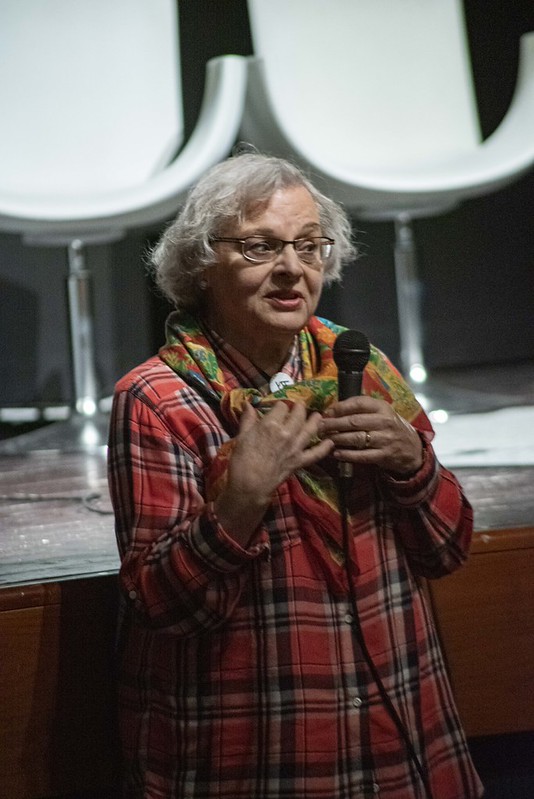
L.B.: Before we say goodbye, Diane, do you want to add something, please? Because I think we interrupted you.
DIANE K. K.: Just as you were talking about this complicated setup that Murnau did on Sunrise, we were chatting a day or so ago with Lea Jacobs about her book about John Ford, who was working at the Fox studio at the same time as Murnau was making Sunrise, and she has a feeling that all the directors knew what a hotshot Murnau was and we'd go over and hang around and watch what he was doing and then they wanted to take all those cool ideas and put them into their own films so there was like this burst of expressionist style in everyone's toolkit after that. It was just a striking perception from all her research.
L.B.: You can see what you say in Ford’s Four Sons (1928).
DIANE K. K.: That was the cool thing to do that season, to go watch this German director do his thing on his picture.
L.B: But have you done some special research in the silent film field on your own?
DIANE K. K.: I have a master's degree from the same cinema studies program. One of my course papers was on the topic of William S. Hart. So, I took two years to do my term paper. That booklet about Hart has proven to be a useful album of all his films with production information and dates and things. People still have it on their desks to figure out which film they're looking at, you know, because his films were chopped up and given many different titles because he was so popular. People just kidnapped the films, put a new title on it, and they could sell a new William S. Hart film. Anyway, I have some interest and expertise in one topic within cinema, but I'm interested in silent films.
L.B.: But at least you are specialist in one topic.
DIANA: Yeah, that's my one big moment in history. My husband has a whole career. I have other interests: cooking and puppets and raising a child. So, I say I can follow the conversation, but sometimes I'm bored. Film gauges. Oh, enough! (laughs).
F.S. Mr. and Mrs. Koszarski, we would like to say thank you for giving us your time and sharing your knowledge with us.
L.B.: And thank you so much for writing these wonderful dedications to Florenci and my Fort Lee clone books!
KOSZARSKI: It was a pleasure. I hope you can come tomorrow. I'll talk a little bit about the book!